DelightsomeLands Limited Uncategorized 3 Ways To Talk To Your Kids So They Will Actually Listen

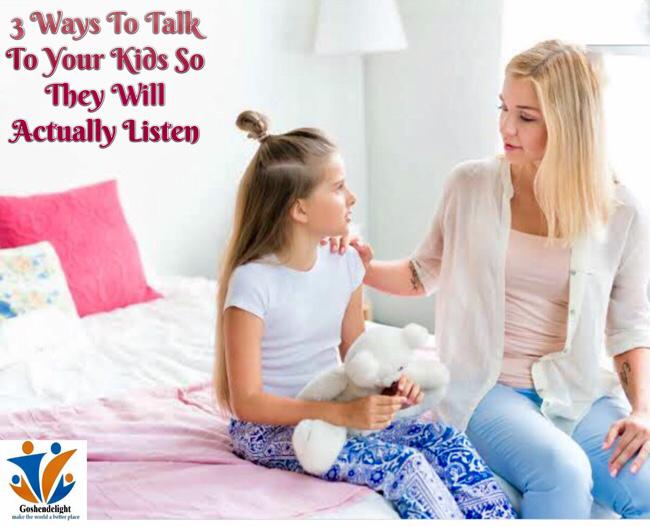
3 Ways To Talk To Your Kids So They Will Actually Listen

3 ways to talk to your kids so they will actually listen, according to one parenting coach

For many parents, raising a child who listens can be one of the most challenging — and important — lessons in life.

Not only is the ability to listen critical to a child’s early development — enabling them to learn and keep safe from harm — but it is also vital for building relationships and achieving professional success later in life.

Still, so often it can feel as though a child is unable — or unwilling — to listen, leading to arguments and tantrums, with parent and child miles apart in their positions.

However, it needn’t be like that, according to parenting expert and authorized “Language of Listening” coach, Camilla Miller. Describing the U.S.-founded, three-step framework as the “missing step in parenting,” Miller said it can help reframe any conflict and allow a child to reach their goals within a parent’s boundaries.

“You get what you want and they get what they want. It’s win-win,” Miller, founder of U.K.-based website and coaching business Keeping your cool parenting, told CNBC Make It.

Here are the three steps for getting your child to listen, according to Miller.

  1. Say what you see

The first step in the “Language of Listening” is simple: Say what you see. Rather than imposing your judgement on your child’s behavior, resist the urge to react and quite literally vocalize what you see.

For example, you may think your child is not sharing, and you wish that they were, but, in their eyes, they are busy playing. Say as much: “You’re busy playing with that toy.” Equally, you may think they are giving you attitude, when, in their mind, they are feeling frustrated. Acknowledge that: “You’re feeling frustrated about this situation.”

“Your child needs to feel heard before they can listen to you,” Miller said. “When your child feels unheard, they feel like you’re dismissing their wants and needs, they think you are telling them how they feel is wrong.”

That doesn’t mean that you need to give in to their demands. But it gives you an opportunity to step into their shoes and figure out the root cause of their behavior.

“So often as parents we go in with a demand or a request, and we haven’t acknowledged what our kids want first,” said Miller. “If you don’t care about what they want, they won’t care about what you want.”

  1. Offer a can-do

Once you have understood and empathized with your child’s behavior, you will be in a better position to help them move forward and find a solution.

If they are displaying a behavior you don’t like, help them redirect that energy toward something you do like.
For instance, they may be jumping on the sofa and you would prefer they didn’t. Acknowledge their desire to jump around and blow off steam, but help them direct that energy to a different space like the floor or a trampoline. Alternatively, they may be demanding a new toy and their birthday has just passed. Help them think of some ways they can purchase it for themselves, such as by earning extra pocket money.

“It’s about looking at the need behind the behavior and helping them to meet that need in a way that is acceptable to you,” said Miller.

If, though, they are demonstrating a behavior you do like, acknowledge and enable it to help reinforce such behaviors in future.

  1. Finish off with a strength

When you have deescalated the situation and reached a compromise, conclude the discussion by highlighting a strength your child has displayed.

Avoid structuring the feedback with yourself at the center, however, i.e. “I’m so happy you did that.” Rather, make them the focus, for example by saying: “You’re such a problem solver, you found a way to fix that.”
That way, they will recognize themselves as an active participant in the situation and one with strong decision-making capabilities, which are more likely to be repeated over time.

“By adopting the child’s inner voice, it helps them reinforce those behaviors and build their self-esteem,” Miller said.

Changing your own reaction

While the “Language of Listening” framework is structured principally for children, it’s one that can also be applied to other age groups and situations, including teenagers, colleagues and romantic relationships, according to Miller.

In the case of teenagers, for instance, saying what you see can help them better understand themselves when they may be behaving in unusual ways, while simultaneously opening up the channels of communication with you as a parent.

“Generally, the reason people act out or shout is because of their need for power,” said Miller, noting the need to respect that desire.

Meanwhile, truly listening to and being understanding of other people’s perspectives can help you be more considerate and compassionate as a person, too.

“It’s actually understanding your own behavior as well,” continued Miller. “The quickest way to change our reaction is to change how we see things.”

Source:cnbc.com
Leave a Reply

Your email address will not be published. Required fields are marked *

Related Post

What is Postpartum Depression?Postpartum depression (PPD) is a complex mix of physical, emotional, and behavioral changes that happen in some women after giving birth. According to the DSM-5, a manual used to diagnose mental disorders, PPD is a form of major depression that begins within 4 weeks after delivery. The diagnosis of postpartum depression is based not only on the length of time between delivery and onset but on the severity of the depression.Postpartum depression is linked to chemical, social, and psychological changes that happen when having a baby. The term describes a range of physical and emotional changes that many new mothers experience. PPD can be treated with medication and counseling.The chemical changes involve a rapid drop in hormones after delivery. The actual link between this drop and depression is still not clear. But what is known is that the levels of estrogen and progesterone, the female reproductive hormones, increase tenfold during pregnancy. Then, they drop sharply after delivery. By 3 days after a woman gives birth, the levels of these hormones drop back to what they were before pregnancy.In addition to these chemical changes, the social and psychological changes of having a baby create an increased risk of depression.Most new mothers experience the “baby blues” after delivery. About 1 out of every 10 of these women will develop a more severe and longer-lasting depression after delivery. About 1 in 1,000 women develop a more serious condition called postpartum psychosis.Dads aren’t immune. Research shows that about 1 in 10 new fathers get depression during the year their child is born. *Postpartum Depression Signs and Symptoms*Symptoms of postpartum depression can be hard to detect. Many women have these symptoms following childbirth:•Trouble sleeping •Appetite changes •Severe fatigue •Lower libido •Frequent mood changes With PPD, these come along with other symptoms of major depression, which aren’t typical after childbirth, and may include: •Being uninterested in your baby or feeling like you’re not bonding with them•Crying all the time, often for no reason•Depressed mood •Severe anger and crankiness•Loss of pleasure •Feelings of worthlessness, hopelessness, and helplessness •Thoughts of death or suicide •Thoughts of hurting someone else•Trouble concentrating or making decisionsSymptoms of obsessive compulsive disorder (OCD) that are new rarely occur in the postpartum period (about 1%-3% of women). The obsessions are usually related to concerns about the baby’s health or irrational fears of harming the baby. Panic disorder may also happen. You can have these conditions and depression at the same time.Untreated postpartum depression can be dangerous for new moms and their children. A new mom should seek professional help when:•Symptoms persist beyond 2 weeks•They can’t function normally•They can’t cope with everyday situations•They have thoughts of harming themselves or their baby•They’re feeling extremely anxious, scared, and panicked most of the day.*Postpartum Depression Causes and Risk Factors*If you have PPD, it’s not because you did anything wrong. Experts think it happens for many reasons, and those can be different for different people. Some things that can raise the chances of postpartum depression include:•A history of depression prior to becoming pregnant, or during pregnancy•Age at time of pregnancy (the younger you are, the higher the chances)•Ambivalence about the pregnancyChildren (the more you have, the more likely you are to be depressed in a later pregnancy)•Family history of mood disorders•Going through an extremely stressful event, like a job loss or health crisis•Having a child with special needs or health problems•Having twins or triplets•Having a history of depression or premenstrual dysphoric disorder (PMDD)•Limited social support•Living alone•Marital conflictThere’s no one cause of postpartum depression, but these physical and emotional issues may contribute:*•Hormones*. The dramatic drop in estrogen and progesterone after you give birth may play a role. Other hormones produced by your thyroid gland also may drop sharply and make you feel tired, sluggish and depressed.*•Lack of sleep.* When you’re sleep-deprived and overwhelmed, you may have trouble handling even minor problems. *•Anxiety*. You may be anxious about your ability to care for a newborn. *•Self Image.* You may feel less attractive, struggle with your sense of identity, or feel that you’ve lost control over your life. _Any of these issues can contribute to postpartum depression._*Types of postpartum depression*There are three terms used to describe the mood changes women can have after giving birth:•The “baby blues”happen to as many as 70% of women in the days right after childbirth. You may have sudden mood swings, such as feeling very happy and then feeling very sad. You may cry for no reason and can feel impatient, cranky, restless, anxious, lonely, and sad. The baby blues may last only a few hours or as long as 1 to 2 weeks after delivery. Usually you don’t need treatment from a health care provider for baby blues. Often, joining a support group of new moms or talking with other moms helps.•*Postpartum depression (PPD) *can happen a few days or even months after childbirth. PPD can happen after the birth of any child, not just the first child. You can have feelings similar to the baby blues — sadness, despair, anxiety, crankiness — but you feel them much more strongly. PPD often keeps you from doing the things you need to do every day. When your ability to function is affected, you need to see a health care provider, such as your OB/GYN or primary care doctor. This doctor can screen you for depression symptoms and come up with a treatment plan. If you don’t get treatment for PPD, symptoms can get worse. While PPD is a serious condition, it can be treated with medication and counseling.•*Postpartum psychosis* is a very serious mental illness that can affect new mothers. This illness can happen quickly, often within the first 3 months after childbirth. Women can lose touch with reality, having auditory hallucinations (hearing things that aren’t actually happening, like a person talking) and delusions (strongly believing things that are clearly irrational). Visual hallucinations (seeing things that aren’t there) are less common. Other symptoms include insomnia (not being able to sleep), feeling agitated and angry, pacing, restlessness, and strange feelings and behaviors. Women who have postpartum psychosis need treatment right away and almost always need medication. Sometimes women are put into the hospital because they are at risk for hurting themselves or someone else.*Postpartum Depression Treatment*Postpartum depression is treated differently, depending on the type of symptoms and how severe they are. Treatment options include anti-anxiety or antidepressant medications, psychotherapy, and participation in a support group for emotional support and education. For severe cases, an IV of a new medication called brexanolone (Zulresso) may be prescribed.In the case of postpartum psychosis, drugs used to treat psychosis are usually added. Hospital admission is also often necessary.If you are breastfeeding, don’t assume that you can’t take medication for depression, anxiety, or even psychosis. Talk to your doctor. Under a doctor’s supervision, many women take medication while breastfeeding. This is a decision to be made between you and your doctor.*Postpartum Depression Complications*Postpartum depression that isn’t treated can weaken your ability to bond with your baby, and affect the whole family:•*You*. Postpartum depression that’s not treated can last for months or longer, even turning into a chronic depressive disorder. Even with treatment, postpartum depression can make you more likely to have episodes of depression in the future.•*The baby’s father*. When a new mother has depression, the father may be more likely to have depression too.•*Children*. Children of mothers with postpartum depression are more likely to have problems with sleeping and eating, crying more than usual, and delays in language development.*Postpartum Depression Prevention*If you have a history of depression, tell your doctor as soon as you find out you’re pregnant, or if you’re planning to become pregnant.During pregnancy. Your doctor can monitor you for symptoms. You can manage mild depression symptoms with support groups, counseling, or other therapies. Your doctor may prescribe medications, even while you’re pregnant.After your baby is born. Your doctor may recommend an early postpartum checkup to look for symptoms of depression. The earlier you’re diagnosed, the earlier you can begin treatment. If you have a history of postpartum depression, your doctor may recommend treatment as soon as you have the baby.Managing after childbirthHere are some tips that can help you cope with bringing home a newborn:•Ask for help. Let others know how they can help you.•Be realistic about your expectations for yourself and baby.•Exercise , within the limits of any restrictions your doctor may place on your level of activity; take a walk, and get out of the house for a break.•Expect some good days and some bad days.•Follow a sensible diet; avoid alcohol and caffeine.•Foster the relationship with your partner — make time for each other.•Keep in touch with family and friends — don’t isolate yourself.•Limit visitors when you first go home.•Screen phone calls.•Sleep or rest when your baby sleeps.Source webmd.comWhat is Postpartum Depression?Postpartum depression (PPD) is a complex mix of physical, emotional, and behavioral changes that happen in some women after giving birth. According to the DSM-5, a manual used to diagnose mental disorders, PPD is a form of major depression that begins within 4 weeks after delivery. The diagnosis of postpartum depression is based not only on the length of time between delivery and onset but on the severity of the depression.Postpartum depression is linked to chemical, social, and psychological changes that happen when having a baby. The term describes a range of physical and emotional changes that many new mothers experience. PPD can be treated with medication and counseling.The chemical changes involve a rapid drop in hormones after delivery. The actual link between this drop and depression is still not clear. But what is known is that the levels of estrogen and progesterone, the female reproductive hormones, increase tenfold during pregnancy. Then, they drop sharply after delivery. By 3 days after a woman gives birth, the levels of these hormones drop back to what they were before pregnancy.In addition to these chemical changes, the social and psychological changes of having a baby create an increased risk of depression.Most new mothers experience the “baby blues” after delivery. About 1 out of every 10 of these women will develop a more severe and longer-lasting depression after delivery. About 1 in 1,000 women develop a more serious condition called postpartum psychosis.Dads aren’t immune. Research shows that about 1 in 10 new fathers get depression during the year their child is born. *Postpartum Depression Signs and Symptoms*Symptoms of postpartum depression can be hard to detect. Many women have these symptoms following childbirth:•Trouble sleeping •Appetite changes •Severe fatigue •Lower libido •Frequent mood changes With PPD, these come along with other symptoms of major depression, which aren’t typical after childbirth, and may include: •Being uninterested in your baby or feeling like you’re not bonding with them•Crying all the time, often for no reason•Depressed mood •Severe anger and crankiness•Loss of pleasure •Feelings of worthlessness, hopelessness, and helplessness •Thoughts of death or suicide •Thoughts of hurting someone else•Trouble concentrating or making decisionsSymptoms of obsessive compulsive disorder (OCD) that are new rarely occur in the postpartum period (about 1%-3% of women). The obsessions are usually related to concerns about the baby’s health or irrational fears of harming the baby. Panic disorder may also happen. You can have these conditions and depression at the same time.Untreated postpartum depression can be dangerous for new moms and their children. A new mom should seek professional help when:•Symptoms persist beyond 2 weeks•They can’t function normally•They can’t cope with everyday situations•They have thoughts of harming themselves or their baby•They’re feeling extremely anxious, scared, and panicked most of the day.*Postpartum Depression Causes and Risk Factors*If you have PPD, it’s not because you did anything wrong. Experts think it happens for many reasons, and those can be different for different people. Some things that can raise the chances of postpartum depression include:•A history of depression prior to becoming pregnant, or during pregnancy•Age at time of pregnancy (the younger you are, the higher the chances)•Ambivalence about the pregnancyChildren (the more you have, the more likely you are to be depressed in a later pregnancy)•Family history of mood disorders•Going through an extremely stressful event, like a job loss or health crisis•Having a child with special needs or health problems•Having twins or triplets•Having a history of depression or premenstrual dysphoric disorder (PMDD)•Limited social support•Living alone•Marital conflictThere’s no one cause of postpartum depression, but these physical and emotional issues may contribute:*•Hormones*. The dramatic drop in estrogen and progesterone after you give birth may play a role. Other hormones produced by your thyroid gland also may drop sharply and make you feel tired, sluggish and depressed.*•Lack of sleep.* When you’re sleep-deprived and overwhelmed, you may have trouble handling even minor problems. *•Anxiety*. You may be anxious about your ability to care for a newborn. *•Self Image.* You may feel less attractive, struggle with your sense of identity, or feel that you’ve lost control over your life. _Any of these issues can contribute to postpartum depression._*Types of postpartum depression*There are three terms used to describe the mood changes women can have after giving birth:•The “baby blues”happen to as many as 70% of women in the days right after childbirth. You may have sudden mood swings, such as feeling very happy and then feeling very sad. You may cry for no reason and can feel impatient, cranky, restless, anxious, lonely, and sad. The baby blues may last only a few hours or as long as 1 to 2 weeks after delivery. Usually you don’t need treatment from a health care provider for baby blues. Often, joining a support group of new moms or talking with other moms helps.•*Postpartum depression (PPD) *can happen a few days or even months after childbirth. PPD can happen after the birth of any child, not just the first child. You can have feelings similar to the baby blues — sadness, despair, anxiety, crankiness — but you feel them much more strongly. PPD often keeps you from doing the things you need to do every day. When your ability to function is affected, you need to see a health care provider, such as your OB/GYN or primary care doctor. This doctor can screen you for depression symptoms and come up with a treatment plan. If you don’t get treatment for PPD, symptoms can get worse. While PPD is a serious condition, it can be treated with medication and counseling.•*Postpartum psychosis* is a very serious mental illness that can affect new mothers. This illness can happen quickly, often within the first 3 months after childbirth. Women can lose touch with reality, having auditory hallucinations (hearing things that aren’t actually happening, like a person talking) and delusions (strongly believing things that are clearly irrational). Visual hallucinations (seeing things that aren’t there) are less common. Other symptoms include insomnia (not being able to sleep), feeling agitated and angry, pacing, restlessness, and strange feelings and behaviors. Women who have postpartum psychosis need treatment right away and almost always need medication. Sometimes women are put into the hospital because they are at risk for hurting themselves or someone else.*Postpartum Depression Treatment*Postpartum depression is treated differently, depending on the type of symptoms and how severe they are. Treatment options include anti-anxiety or antidepressant medications, psychotherapy, and participation in a support group for emotional support and education. For severe cases, an IV of a new medication called brexanolone (Zulresso) may be prescribed.In the case of postpartum psychosis, drugs used to treat psychosis are usually added. Hospital admission is also often necessary.If you are breastfeeding, don’t assume that you can’t take medication for depression, anxiety, or even psychosis. Talk to your doctor. Under a doctor’s supervision, many women take medication while breastfeeding. This is a decision to be made between you and your doctor.*Postpartum Depression Complications*Postpartum depression that isn’t treated can weaken your ability to bond with your baby, and affect the whole family:•*You*. Postpartum depression that’s not treated can last for months or longer, even turning into a chronic depressive disorder. Even with treatment, postpartum depression can make you more likely to have episodes of depression in the future.•*The baby’s father*. When a new mother has depression, the father may be more likely to have depression too.•*Children*. Children of mothers with postpartum depression are more likely to have problems with sleeping and eating, crying more than usual, and delays in language development.*Postpartum Depression Prevention*If you have a history of depression, tell your doctor as soon as you find out you’re pregnant, or if you’re planning to become pregnant.During pregnancy. Your doctor can monitor you for symptoms. You can manage mild depression symptoms with support groups, counseling, or other therapies. Your doctor may prescribe medications, even while you’re pregnant.After your baby is born. Your doctor may recommend an early postpartum checkup to look for symptoms of depression. The earlier you’re diagnosed, the earlier you can begin treatment. If you have a history of postpartum depression, your doctor may recommend treatment as soon as you have the baby.Managing after childbirthHere are some tips that can help you cope with bringing home a newborn:•Ask for help. Let others know how they can help you.•Be realistic about your expectations for yourself and baby.•Exercise , within the limits of any restrictions your doctor may place on your level of activity; take a walk, and get out of the house for a break.•Expect some good days and some bad days.•Follow a sensible diet; avoid alcohol and caffeine.•Foster the relationship with your partner — make time for each other.•Keep in touch with family and friends — don’t isolate yourself.•Limit visitors when you first go home.•Screen phone calls.•Sleep or rest when your baby sleeps.Source webmd.com

Uncategorized