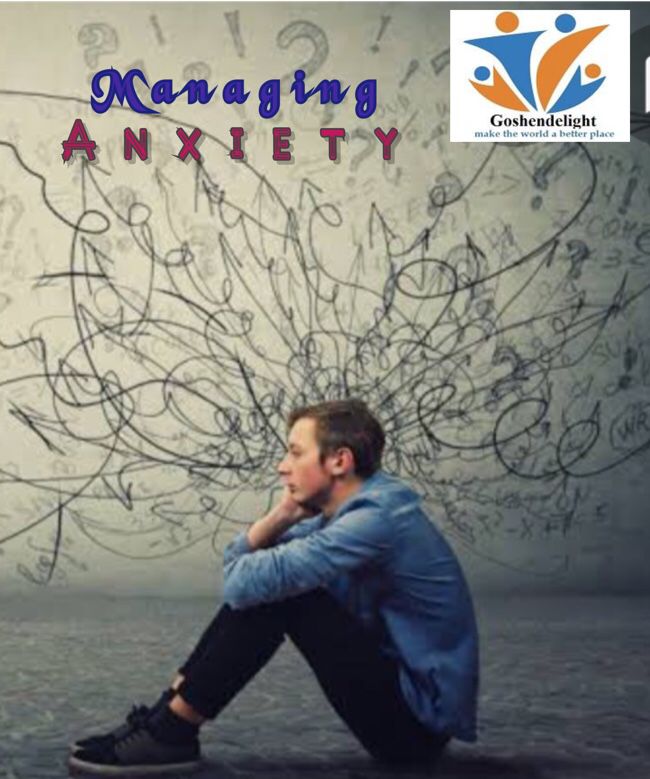
ANXIETY – WHAT IT IS AND HOW TO MANAGE IT.
In all honesty, experiencing occasional anxiety is part and parcel of everyday life. But, some people have anxiety disorders. They face excessive,intense, and persistent fear and worry related to routine, everyday situations.
Anxiety disorders often involve the sudden feelings of extreme terror or fear that reach their zenith rapidly. It is often categorised as a panic attack and can intervene with your everyday routine. Hence,prompt action and steps towards anxiety management are a must.
SYMPTOMS OF ANXIETY
Anxiety symptoms may be different for everyone. However, typically,the body reacts in a specific way to anxiety. So, anytime you are anxious, your body goes on a high alert. You start searching for possible danger signs. It also triggers your fight or flight responses.
Generally, people with anxiety experience symptoms such as being tense,rapid heart rate,chest pain, nervousness,feelings of danger, dreadfulness, panicking, restlessness,fear of death, feeling of choking, dizziness, hyperventilation, excessive sweating,lethargy, weakness, trembling,losing control, feeling detached from self or reality,insomnia,feeling faint, inability to focus on things, repeating some behaviours, feeling hot or cold, breathlessness, tingling sensation or numbness, palpitations,panic attacks, obsessive -compulsive disorder, and gastrointestinal issues,such as diarrhoea, constipation,or gas.
CAUSES OF ANXIETY
A few prevalent causes of anxiety are :
•GENETICS
Usually, anxiety disorders runs in the family.
•BRAIN CHEMISTRY
A few studies suggest that anxiety disorders result from faulty brain circuits, which influence your emotions and sense of fear.
•MEDICAL CONDITIONS
Thyroid,lung,and heart conditions can result in symptoms similar to anxiety disorders. They ma also aggravate your symptoms.
•ENVIRONMENTAL STRESS
Stressful activities you lived or saw in your life, such as neglect, childhood abuse, loss of a loved one, violence or being attacked, can cause anxiety.
•RISK FACTORS
There are a few things that can aggravate your susceptibility to anxiety disorders. These are known as anxiety risk factors. A few of them are listed below:
~TRAUMA
People who live through a traumatic event have a heightened risk of posttraumatic stress disorder (PTSD), which results in anxiety disorder.
~CHILDHOOD ABUSE
Neglect,sexual, physical,or emotional abuse during childhood can cause anxiety disorders later in life.
HISTORY OF MENTAL HEALTH DISORDER
People with mental health disorders such as depression have a higher risk of anxiety disorder.
STRESSFUL LIFE EVENT
Losing a loved one or a parent early in life can also aggravate your risk of developing an anxiety disorder.
A CHRONIC HEALTH CONDITION OR SEVERE ILLNESS
Being constantly worried about your health or the health of a loved one can also leave you feeling anxious or overwhelmed.
LOW SELF-ESTEEM
Having a negative perception of self can also result in a social anxiety disorder.
BEING SHY AS A CHILD
Withdrawal from unfamiliar places or people and shyness during childhood can cause social anxiety in adults and teens .
DIAGNOSIS OF ANXIETY
Unfortunately, no single test can help with an anxiety diagnosis. For a proper diagnosis,there is a detailed process. It involves physical examination,health evaluations,and filling up multiple psychological questionnaires. At times, medical experts may recommend a urine or blood test. It helps rule out any other underlying condition possibly causing the symptoms. Doctors may also use some anxiety scales and tests to determine the degree.
TREATMENT OF ANXIETY
There are treatment options to help with anxiety management. Below we will discuss a few of them:
PSYCHOTHERAPY
Psychological counseling, psychotherapy,or talk therapy involves working with a therapist to help with anxiety management. Psychotherapy involves cognitive behavioural therapy (CBT). It is a short-term treatment wherein you learn skills to overcome the symptoms and return to activities that you put off because of anxiety. It also involves exposure therapy to encounter the situations and people that trigger your anxiety. Exposure therapy can help build your confidence.
LIFESTYLE CHANGES
Some lifestyle changes can also help with anxiety management. These include:
EXERCISING
Exercise helps combat stress. So, being physically active on most days of the week can help with anxiety.
CUTTING ON CAFFEINATED BEVERAGES
Caffeinated drinks also heighten anxiety symptoms.
RELAXATION TECHNIQUES
Stress management techniques, visualization techniques,yoga, and meditation also help ease anxiety.
Source: https://explorerance.com/topic/218/?utm_campaign=4426L06&ekw=MI1KrwkpqSi%2B4knteh8Q8g%3D%3D&utm_term=help%20for%20anxiety&utm_source=&utm_medium=b&utm_content=593703007563&g_tg=&g_ti=kwd-298009212151&g_de=m%7C593703007563&g_dm=&g_ap=&g_nw=g&g_ci=16962853590&g_ai=138763731314&g_lp=9076650&g_li=&k=help%20for%20anxiety&gclid=CjwKCAjw682TBhATEiwA9crl39GIbJFNDzQGUJCafa9BS9jFgaELVqqZgf4JTU-JApC8S3bOJyuy6xoCWn0QAvD_BwE